


3 years old - 4 years old Program
The vibrant, talkative and busy toddler focus shifts from primarily physical care (like diapering and feeding) to more interactive and developmental activities. At this age, they are becoming more mobile, communicative, and social, and their daily schedule reflects this transition. The routine balances structured activities with opportunities for independent exploration to help them build social, emotional, cognitive, and physical skills.
Key Features of the 3 years old - 4 years old Program
At this age, they are becoming more mobile, communicative, and social, and their daily schedule reflects this transition.

Safe and Stimulating Environment: The classroom is equipped with age-appropriate toys and materials that encourage both independent exploration and cooperative play. All furniture and toys are child-safe and easy to clean.

Focus on Independence: Toddlers are encouraged to do things on their own, whether it's feeding themselves, stacking blocks, or making choices about which toy to play with.

Consistent Routines: Routine is important at this age because it gives toddlers a sense of security and predictability. However, there’s also room for flexibility depending on the child’s needs.

Caregiver-to-Child Ratio: One-year-old classrooms typically have a ratio of 1 caregiver to 3 or 4 children. This allows for individualized attention and close supervision, especially during activities like eating or outdoor play.

Developmental Goals
The routine balances structured activities with opportunities for independent exploration to help them build social, emotional, cognitive, and physical skills.

Language Development: At one year, many toddlers begin to say their first words. Caregivers engage in constant language modelling, singing songs, and reading stories.

Motor Skills: From crawling to walking and even starting to climb, caregivers provide opportunities for physical development throughout the day.

Social Skills: Toddlers begin to explore relationships with peers, learning about sharing, taking turns, and playing together. Caregivers gently guide these social interactions.

Cognitive Development: Through activities like puzzles, shape sorting, and problem-solving tasks, toddlers begin developing their understanding of cause and effect and spatial awareness.
1. Arrival and Greeting
Parent Drop-Off: Parents bring their toddlers to the daycare and provide any updates about their child’s morning, such as sleeping habits or food preferences. This helps caregivers understand their child’s needs for the day.
Warm Welcome: Caregivers greet the children with a friendly tone and provide comfort as toddlers transition from their parents to the daycare environment.
Settling In: Toddlers are helped to settle into a familiar area where they can engage with a selection of toys or activities until everyone arrives.
2. Diapering/Toilet Training
Snack Time: One Yr. Olds are given a morning snack, which may include finger foods like crackers, fruit, or small pieces of cheese. This helps encourage independence and self-feeding.
Diapering or Potty Time: Diapering is still a regular part of the routine for many one-year-olds, but some toddlers might begin potty training during this time. The caregiver will support the child based on their readiness for potty training, promoting independence in using the toilet.
3. Structured Activity Time (Learning and Exploration)
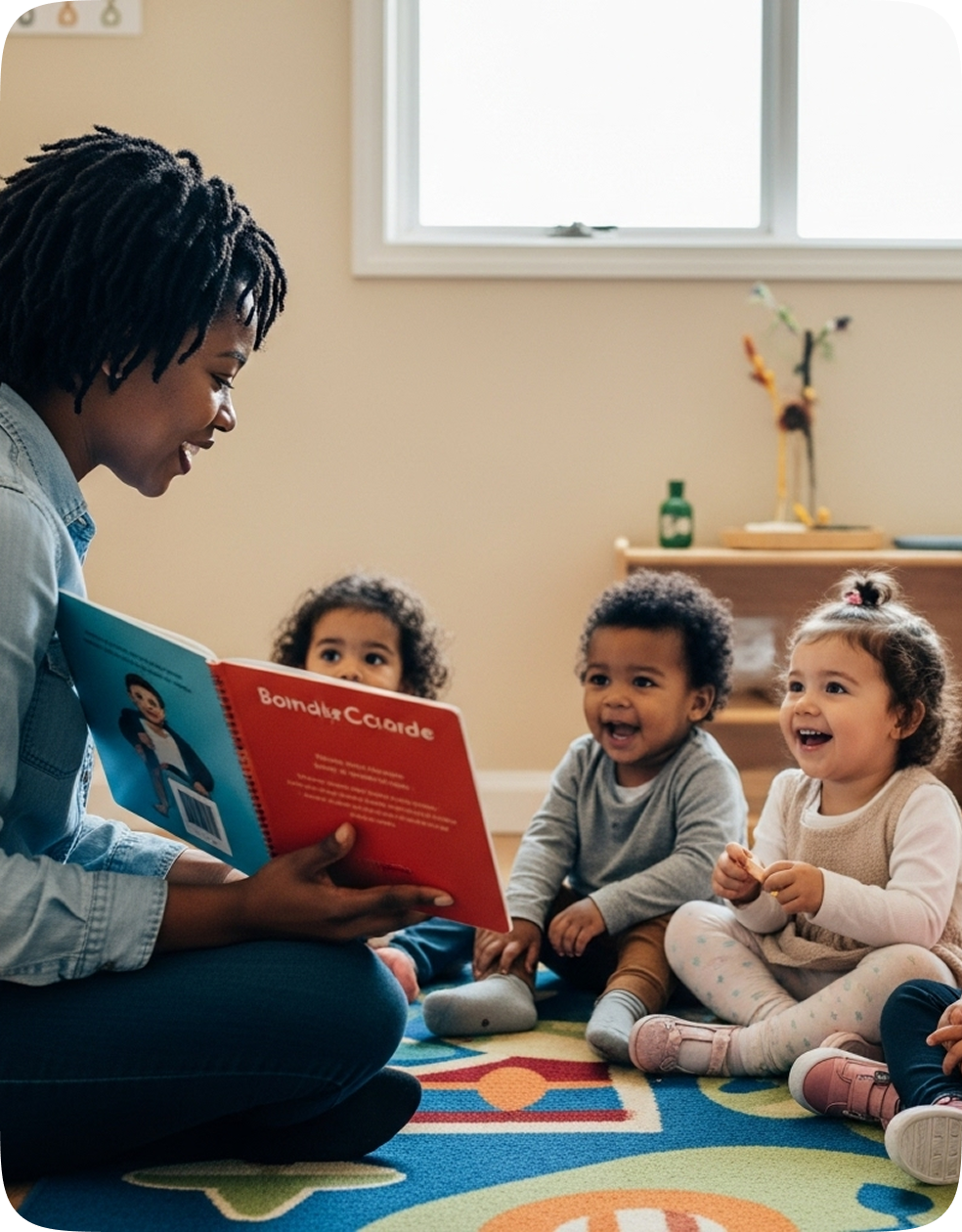
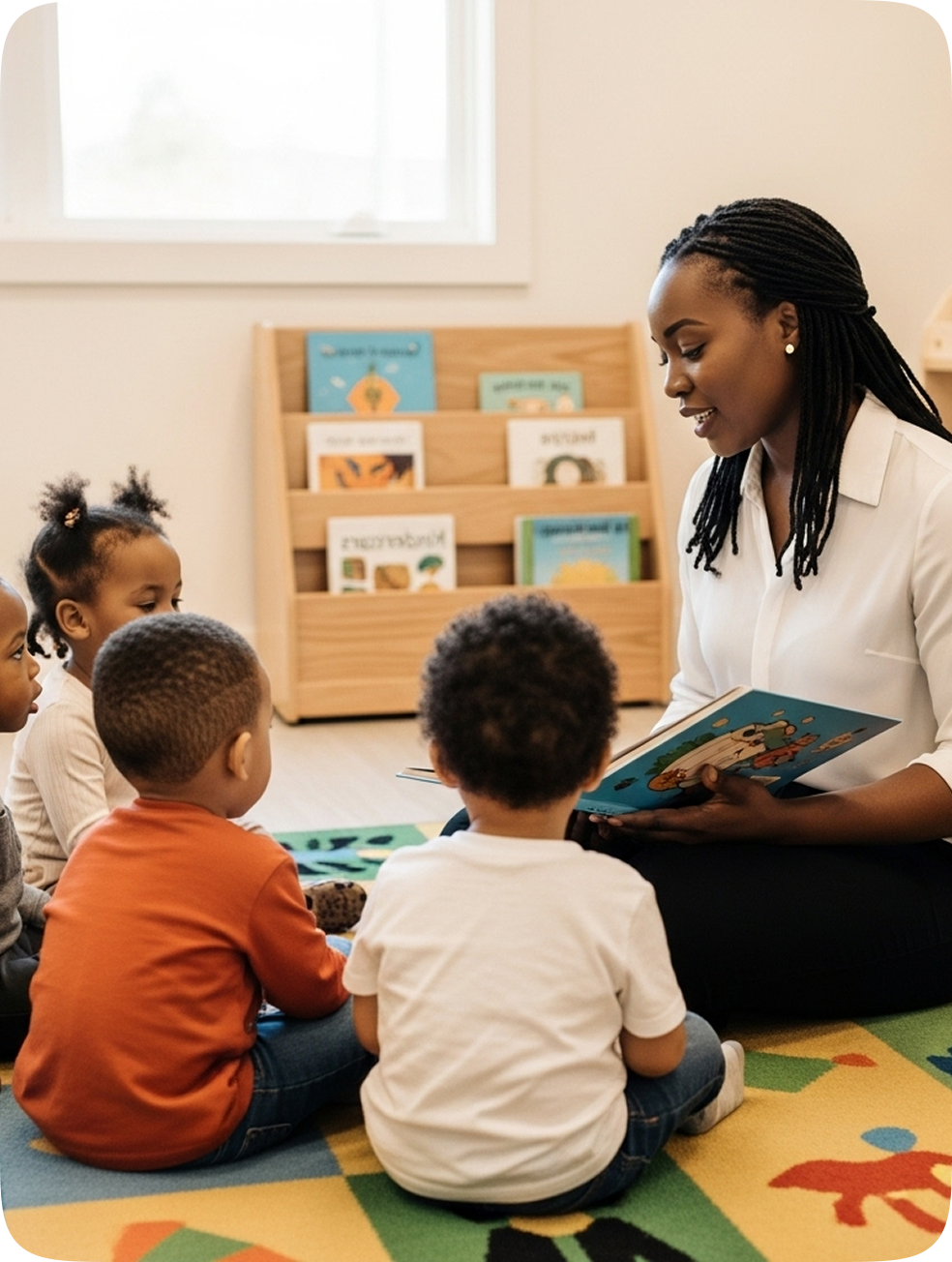
Circle Time: This is a group activity where children gather around the caregiver to listen to simple songs, read short books, or engage in interactive activities (like clapping or playing with puppets). It’s an early introduction to group learning and following directions.
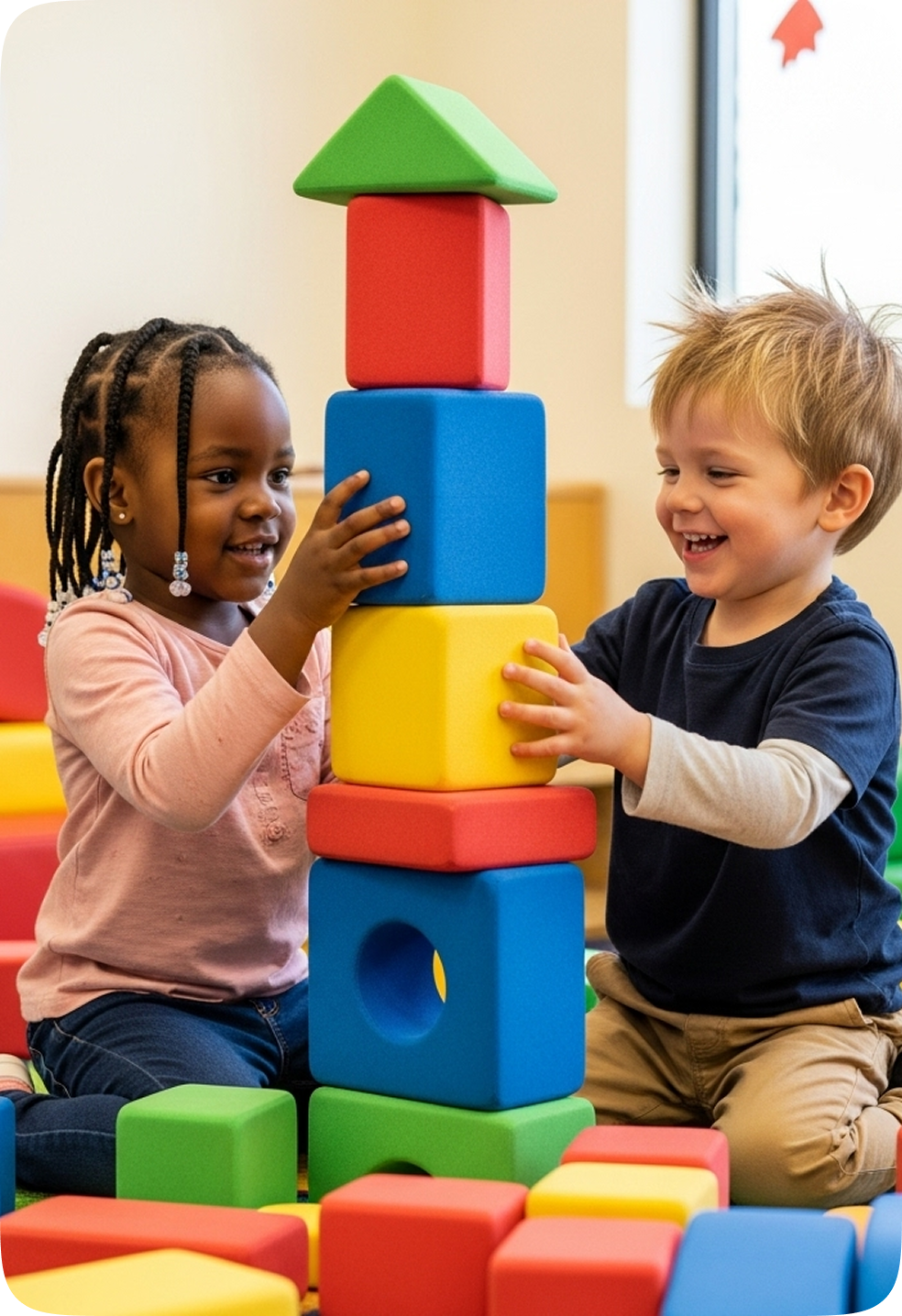
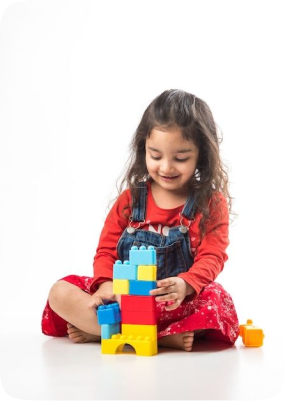
Building Motor Skills: Activities that promote physical development—like stacking blocks, pushing toy cars, or using shape sorters—are introduced. At this age, toddlers are starting to refine their fine motor skills and hand-eye coordination.
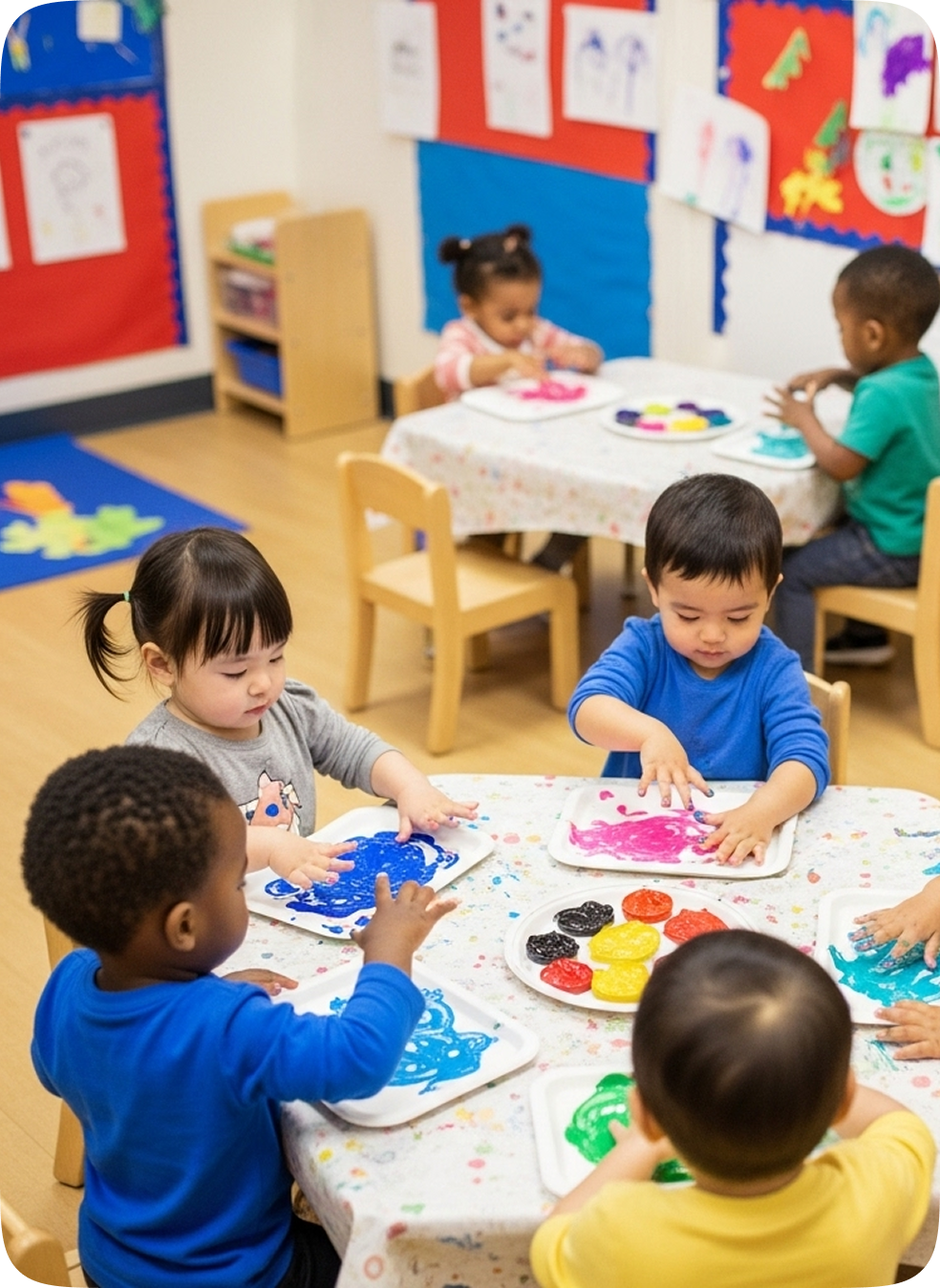
Art Activities: Simple art projects, such as finger painting or playing with playdough, are introduced. This gives toddlers a chance to explore textures and colors while developing sensory awareness.
4. Outdoor Play and Gross Motor Development
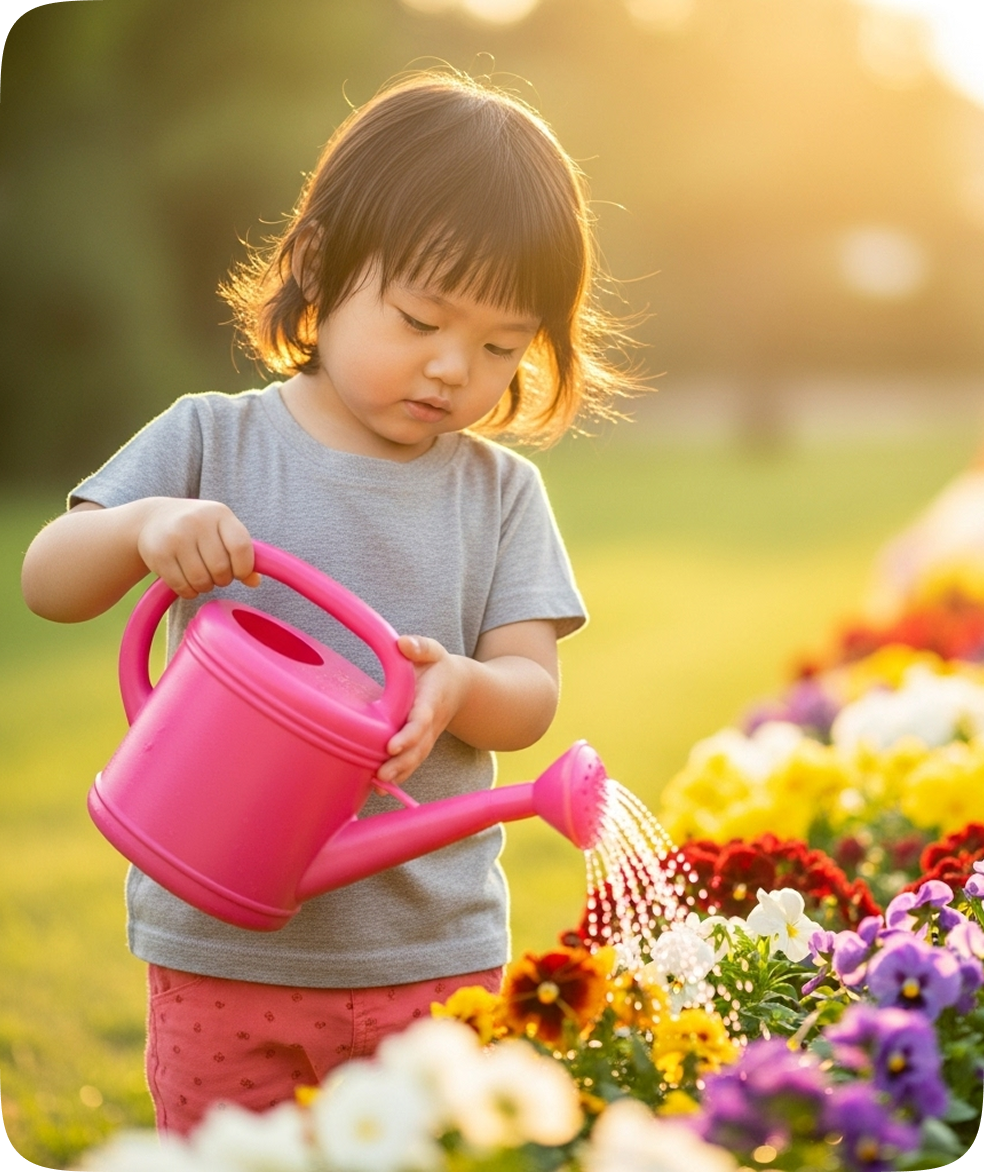
Outdoor Exploration: Time outside is an essential part of the day, allowing individuals to burn off energy and develop their gross motor skills. They might be given toys to push, ride-on cars, or even given space to walk, run, or climb.
Sensory Play: Outdoor play also includes sensory experiences like sandboxes, water tables, or soft balls to help them develop tactile awareness and social skills while they explore.
5. Lunch and Diapering/Toilet Time
Lunch: By this stage, they typically eat more solid foods. The menu might include simple, toddler- friendly meals like pasta, small pieces of chicken, vegetables, or fruits. Caregivers encourage self-feeding, but they are still there to assist when needed.
Diaper Change or Potty Time: After lunch, diapering or potty training continues, ensuring toddlers are kept comfortable and hygienic.
6. Nap Time (Quiet Time)
Rest and Recharge: After a busy morning, toddlers take a nap. Caregivers help children get comfortable by setting up quiet areas with soft blankets or stuffed animals. It’s essential for toddlers to rest to maintain energy levels for the afternoon.
Individualized Attention: Some toddlers may need extra comfort during nap time, while others may need help falling asleep. Caregivers monitor all children, ensuring a peaceful and safe rest environment.
7. Afternoon Snack
Snack Time: After nap time, toddlers usually have an afternoon snack. This might include fruit slices, yogurt, or crackers to help them recharge before the rest of their day.
Self-Feeding: Toddlers are encouraged to practice self-feeding and use utensils as they refine their motor skills and become more independent.
8. Play and Social Interaction
Interactive Play: The afternoon is filled with guided activities and free play. Caregivers engage with toddlers in different types of play, such as:
Pretend Play: Simple role-playing games like pretending to cook with toy kitchen sets or feeding dolls.
Imaginative Play: Activities that promote creativity, such as using toy blocks to build simple structures or dancing to music.
Social Development: One-year-olds begin developing their social skills, so caregivers encourage sharing, taking turns, and using simple words like “please” and “thank you” in their interactions.
9. Story Time and Calm Down
Reading: A calm, cozy time for reading simple books together. Toddlers enjoy books with bright pictures, animal sounds, or interactive elements (flaps to lift or textures to feel).
Soothing Activities: Towards the end of the day, caregivers may offer calming activities like quiet music, rocking, or simple games like “This Little Piggy” to help toddlers wind down before pick-up.
10. Parent Pickup and Communication
Daily Updates: When parents arrive, caregivers provide a detailed update on the child’s day. This includes what they ate, how long they napped, how they interacted with others, and any milestones or observations.
Personalized Goodbyes: Each child is individually seen off with a warm and caring goodbye, strengthening the bond between the child and the caregiver.
Start your Child’s Adventure Today
Secure your child’s spot now and give them the best start in life.